
By now, you’re probably sick of hearing about the Pokémon Go phenomenon, and honestly, I can’t blame you. It’s gotten so invasively popular that one developer has even created a plug-in that will filter out all information related to it in your browser so you don’t have to worry about seeing anything Pokémon Go-related.
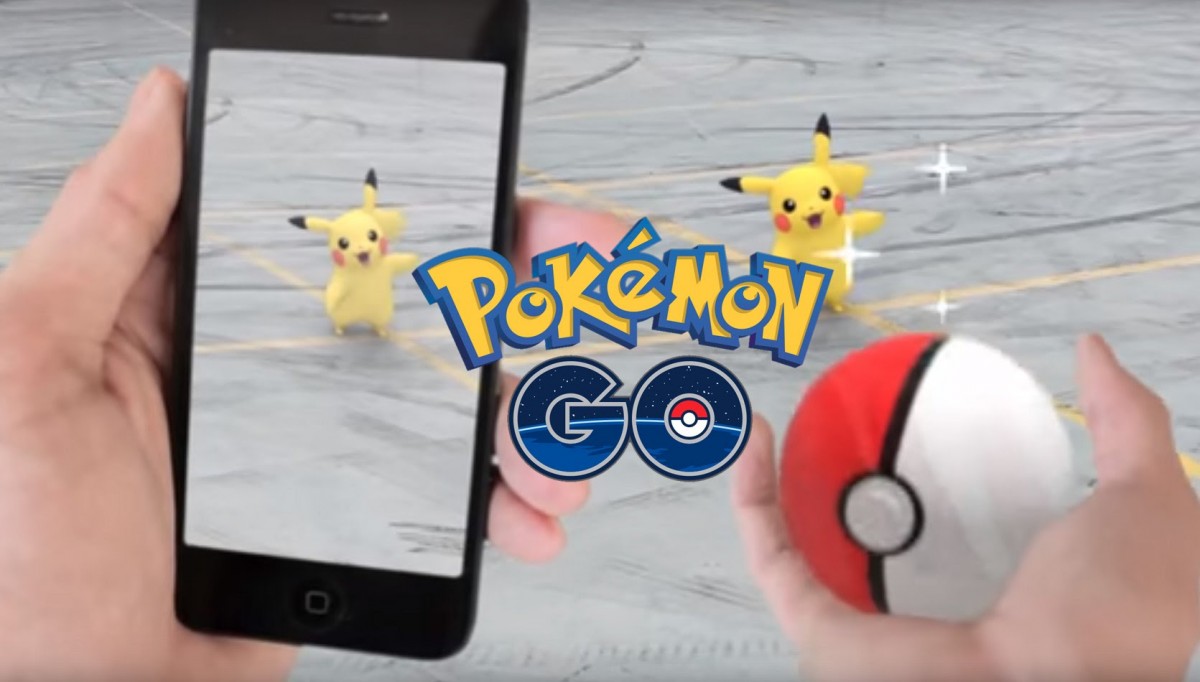
To break it down quickly, Pokémon Go is a “virtual-reality” app where users can walk around searching for creatures to capture all over the city. The goal is to “catch ’em all”, and the rarer the Pokémon, the better. You can train and upgrade your Pokémon, and then battle with other users (called “trainers.”) Pokémon was huge in the 90’s in the form of trading cards, TV shows, video games, etc. and I’d be lying if I wasn’t a little excited when this was released last week. It makes me nostalgic, but also poses a lot of questions. The maps in the app depict real geography almost exactly by the integration of Google Maps . Various locations have been set as “gyms” where users can train and then battle with one another. Since its release, Pokémon Go has proved wildly successful, with Nintendo seeing shares rising over 80%. The University of Nebraska-Lincoln even opened the gates to Memorial Stadium to let the hordes of Pokémon Go users try their luck inside. In the first hour, they saw 1,600 people walk through the doors. Central Park in NYC is overrun, and some ultra-dedicated fans have even taken flights cross-country in attempts to find rare Pokémon. How long before marketing/advertising are mixed in? Niantic, the mobile game company behind Pokémon Go, has stated that in the future, companies will be able to pay for “sponsored locations” that make them desirable spots for Pokémon Go users to visit, driving foot traffic through the door. Brands will utilize GPS based offerings and advertisements accompanied by physical signage that lets people know there are Pokémon inside.
A pizza store owner in NYC paid $10 to have Pokémon “lured” into his store, and the shop’s business went up 75%. Imagine the traffic that would occur if that same business was to be given the exclusive right to an extremely rare Pokémon while requiring that users be paying customers. If the craze continues, you’d have people flying from states away and may even need to hire a security team. The app still has bugs and fixes that need to be made, but it really is the first of its kind, and people of all ages are grabbing hold. I watched a man in his mid-thirties get excited about catching a Pokémon on the table in front of him at a local bar. My friends have been disappearing for hours at a time to explore parks, hoping to stumble across new Pokémon. Usually, popular mobile games fizzle out over time, and Pokémon Go could easily be no different. However, it is hard for me to believe that this is not just Phase 1 of a longer term plan from Nintendo. Just a week after its release, Nintendo announced they would be bringing back the original Nintendo gaming system, the NES, this coming November.
Pokemon Go is currently the number 1 trending topic on several big name social media platforms, which means marketers have been quick to use it as an advertising tactic. Will your friends, co-workers, and even parents still be wandering the city like Pokémon-hunting zombies next week? Probably. Does this mean your Facebook news feed will be littered with Pokémon Go statuses forever? Definitely not. For now, the best thing for marketers to do is pay attention, jump on the bandwagon (if it makes sense), and milk it for what it’s worth. Marketing is about trends, and if hunting for nonexistent Japanese cartoon characters is cool, it’s a safe bet that your favorite brands are welcoming Pikachu to their marketing strategy with open arms.
*Image from http://blogs-images.forbes.com/insertcoin/files/2016/07/pokemon-go-list1-1200×682.jpg